
What does an infrared camera actually see?
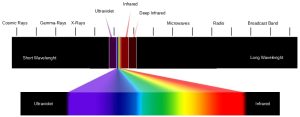
When we look at the world around us, we think we see everything there is. But that’s not even close to being true. Our eyes are only sensitive to a tiny slice of the light that actually exists: the part we call “visible light”. But all around us, all the time, there’s a huge amount of light we just can’t perceive. Infrared is one of those.
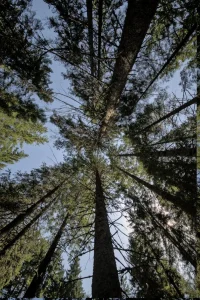
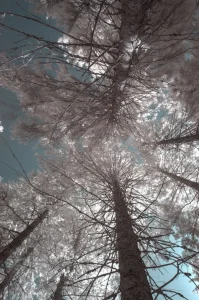
I started getting into this for real back in 2009, but the real turning point was when I modified my first DSLR to full spectrum. Until then, I thought infrared was something for the military or for thermometers. Turns out I was wrong. The sun gives off infrared all the time, plants reflect it, even our own bodies emit it as heat. It’s not sci‑fi. It’s just basic physics. The problem is, our eyes are kind of “badly designed” for this – they only see what’s between red and violet, and that’s it. Infrared sits just beyond red, but for us it stays invisible. Kind of like ultrasound: some animals can hear it, we can’t. Same thing.
So when I look at an infrared photo, I’m not showing some “alternate vision” made up on a computer. I’m just using a tool – a modified camera – that can see what my eyes cannot. There’s no magic. Just a piece of reality we usually ignore.
Can a normal camera see infrared? No, almost never.
This is one of the questions I get asked the most. The short answer is: no, not in the way you’d need it to. Here’s the detail: the sensor in any digital camera would technically be sensitive to infrared too. But manufacturers put a special filter inside, called an “IR cut filter”, which blocks almost all of that light. They do it for a simple reason – they want the colors in normal photos to look like what you see with your own eyes. Without that filter, the red of an apple or the green of grass would come out looking weird, altered.
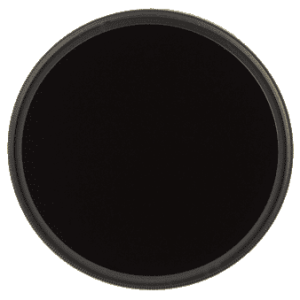
So a regular store‑bought camera can’t do “real” infrared photography. But you can modify it. You remove the internal filter, replace it with a piece of glass that lets certain wavelengths pass through, and then you put a specific external filter in front of the lens (like 720nm, 850nm – I often use 850nm for that clean white look on trees). Only then does the camera actually start seeing the invisible. This isn’t something you do with one click in Photoshop. It’s a physical process, it takes precision, and I did it myself on my first few cameras – with some risks and a few mistakes, I have to say.
Once modified, the camera starts behaving completely differently. Trees turn white or very light, the sky gets dark to the point of becoming black, people’s skin changes its look, grass looks like silver. Not because the camera is “wrong”. But because every material reflects infrared differently. An oak leaf, for example, can reflect more than 50% of the infrared it receives. Air, on the other hand, reflects very little of it. The result is a very strong contrast that just doesn’t exist in the visible spectrum.
Why do I still use infrared in my photos?
I don’t do it because I’m looking for weirdness at all costs. I do it because it taught me something no other type of photography ever showed me: reality is way bigger than what we can see. We tend to take for granted that the world ends where our sight ends. But that’s not true. Infrared existed before us, it exists while we’re reading this post, and it’ll be there after we’re gone. We just don’t see it.
And infrared photography, for me, is a way to remind myself of that. When I look at a photo with white trees and a dark sky, I don’t think “what a strange effect”. I think: “right, this bit of the world has always been here, and only now am I actually looking at it.” The camera didn’t invent anything. It just translated the invisible into something my eyes can finally see.
If I had to sum up in one sentence the meaning of this blog post and my work with infrared, I’d put it like this: we never learn enough that what we see is only part of what’s there. And every now and then, changing your eyes – even with a modified camera – can make all the difference.